Results: 74501 books
Sort By:
NewTrending

Lecturas fáciles con ejercicios

Lawrence A. (Lawrence Augustus) Wilkins

"Lecturas fáciles con ejercicios" by Lawrence A. Wilkins and Max Aaron Luria is a language education book written in the early 20th century. This text aims to facilitate the learning of Spanish through a collection of simple stories and practical exercises designed for beginners. The authors emphasize the importance of teaching students with accessible content that builds a practical vocabulary, gradually introducing more complex themes without overwhelming them. The opening of the book outlines its purpose and organization, presenting a comprehensive approach to teaching Spanish. It discusses the obstacles faced by students when learning the language, particularly highlighting how traditional literary works can be too advanced for beginners. Instead, Wilkins and Luria provide a series of easy-to-understand stories, along with exercises focusing on idiomatic expressions, vocabulary, and grammar. The intent is not only to teach language skills but also to engage students with enjoyable and culturally relevant content, setting a solid foundation for their future studies. (This is an automatically generated summary.)

Die Harzreise

Heinrich Heine

"Die Harzreise" by Heinrich Heine is a travel narrative written in the early 19th century. The work recounts the author's journey through the Harz Mountains, blending personal reflections with observations about the landscape and the people he encounters. Heine's distinctive voice infuses the text with elements of humor, lyricism, and social commentary, making it an engaging exploration of both nature and human experience. The opening of "Die Harzreise" introduces readers to Heinrich Heine's departure from Göttingen, a university town characterized by its quirky inhabitants and vibrant student culture. As Heine leaves the city, he muses about the peculiar socio-academic dynamics of Göttingen and reflects on the liberating power of nature, which he longs to embrace in the mountains. His observations are often infused with wit, as he mixes vivid descriptions of the landscape with humorous anecdotes about student life and interactions with local characters, setting the tone for a journey rich in poetic imagery and philosophical contemplation. (This is an automatically generated summary.)

The Girl Scouts' Good Turn

Edith Lavell

"The Girl Scouts' Good Turn" by Edith Lavell is a novel for younger readers written in the early 20th century. The story revolves around Marjorie Wilkinson, a lively sophomore at Miss Allen's Boarding School, as she leads her classmates in social activities while nurturing a budding sense of leadership and responsibility, particularly toward the incoming freshmen and a troubled newcomer named Frieda. At the start of the book, the excitement is palpable as Marjorie and her classmates prepare for a reception to welcome the freshmen. The opening chapters vividly describe the charming details of the event, showcasing Marjorie's role as the enthusiastic organizer. Throughout these early pages, her interactions with friends and potential rivals hint at the underlying challenges she faces in both friendship and leadership. We also meet Alice Endicott, a shy freshman who struggles with feelings of loneliness and homesickness, as well as Frieda, a newcomer whose past misdeeds cast a shadow over her acceptance among the other girls. Marjorie's intentions to foster a supportive environment for these girls set the stage for themes of friendship, empathy, and the complexities of adolescent social life within the Girl Scouts framework. (This is an automatically generated summary.)

Gun for Hire

Mack Reynolds

"Gun for Hire" by Mack Reynolds is a science fiction novel written in the early 1960s. The story centers on Joe Prantera, a professional hitman from the year 1960, who is transported to the far future of 2133. The book tackles themes of morality and the consequences of violence, presenting a future society that has evolved away from such concepts. The plot begins with Joe Prantera mid-assassination, only to awaken in a future unknown to him where societal norms have drastically changed. In this new world, the leaders of society are concerned about a rising dangerous figure, Howard Temple-Tracy, and they recruit Joe to eliminate him. However, Prantera finds himself grappling with the bewildering reality that this society has eliminated crime and punishment. As he learns more about this advanced society, he realizes the implications of his past actions and the challenges of adapting to a world where his skills as a gunman are both obsolete and dangerous. The climax reveals a twist as Joe uncovers ulterior motives behind his assignment, making for a thought-provoking exploration of free will, redemption, and the nature of evil. (This is an automatically generated summary.)

Greener Than You Think

Ward Moore

"Greener Than You Think" by Ward Moore is a novel written in the late 20th century. The story follows Albert Weener, a salesman who becomes entangled with Josephine Spencer Francis, a scientist who has invented a substance called the Metamorphizer, which can transform any plant, including grasses, allowing it to thrive in barren environments. This discovery sets off a chain of events that explores the implications of such a powerful product. The opening of the narrative introduces Albert Weener, whose ambitious nature leads him to Josephine's run-down laboratory after responding to an enticing job advertisement. Despite his skepticism regarding her methods and the disheveled state of her workspace, he becomes intrigued by her revolutionary idea of the Metamorphizer, which has the potential to change the agricultural landscape. Weener's journey begins as he reluctantly agrees to sell the Metamorphizer, hoping to make a profit while showcasing the challenges and absurdities of selling a plant-based product to the public. The plot's humor and social commentary unfold as Weener faces the unexpected consequences of the Metamorphizer's impact on lawns and the chaotic events that follow, including a burgeoning crisis involving an ever-growing lawn. (This is an automatically generated summary.)

A viagem da Índia: poemeto em dois cantos

Fernandes Costa

"A viagem da Índia: poemeto em dois cantos" by Fernandes Costa is a poetic work written during the late 19th century. This poem consists of two sections that reflect on the historic journeys and discoveries made by Portuguese explorers, particularly focusing on the quest for India. The likely theme of the poem is the celebration of exploration and the valor of those who took part in these monumental voyages. The poem unfolds in two distinct cantos: the first canto describes the adventurous sea voyage towards India, emphasizing the bravery and determination of the Portuguese sailors who set out to explore uncharted territories. They encounter various challenges and mystifying phenomena, representing both their physical journey and the spiritual aspirations of their mission. The second canto shifts focus to their triumphant return, celebrating their accomplishments and the glory they brought back to Portugal. Throughout the verses, there is a strong sense of national pride and an acknowledgment of the profound impacts of their voyages on history, destiny, and humanity. The poem captures the emotional and cultural significance of these explorations, intertwining elements of faith, hope, and the relentless pursuit of knowledge. (This is an automatically generated summary.)

A Girl of the Commune

G. A. (George Alfred) Henty

"A Girl of the Commune" by G. A. Henty is a historical novel written in the late 19th century. The story is set against the backdrop of the Paris Commune, focusing on themes of social change and personal conflicts. The main character, Mary Brander, is depicted as a strong-willed young woman who holds progressive views on women's rights and is determined to carve out her own path in life, contrasting with the more traditional expectations of her family and society. The opening of the narrative establishes the character of Jeremiah Brander, a respected lawyer in the town of Abchester, whose family life is marred by tensions between his ambitions and his wife's desire for a more settled existence. The text delves into family dynamics, particularly focusing on Mary, who is influenced by her time at Girton College and is committed to advocating for women's roles in society. As the story unfolds, it hints at the tensions stirring within them, setting the stage for the juxtaposition between Mary's ideals and the societal norms she challenges. The prologue is rich in character development and societal commentary, providing a foundation for the conflicts that will unfold in the narrative. (This is an automatically generated summary.)

Six mois dans les Montagnes-Rocheuses

Honoré Beaugrand

"Six mois dans les Montagnes-Rocheuses" by Honoré Beaugrand is a travel narrative written in the late 19th century. This work captures the author's experiences during an extended journey through the Rocky Mountains, specifically in Colorado, Utah, and New Mexico, shedding light on the landscapes, cultures, and history of the region. The text emphasizes the connection between the Canadian-French pioneers and the exploration of the American West, illustrating their adventures and contributions to the area. The opening of the narrative sets the stage for Beaugrand's exploration, revealing that he undertook this journey primarily for health reasons amid the picturesque yet relatively unexplored territories of the Rockies. He conveys the challenging yet uncharted nature of the landscapes he traversed and notes the presence of Indigenous peoples and the encroaching influence of modern civilization. Through an informal yet informative style, Beaugrand intends to document his observations, blending historical anecdotes with personal encounters, while also highlighting the rich legacy of French-Canadian explorers in the region. (This is an automatically generated summary.)

Broken Bread, from an Evangelist's Wallet

Thomas Champness

"Broken Bread, from an Evangelist's Wallet" by Thomas Champness is a collection of spiritual reflections and exhortations written in the late 19th century. The work presents various thoughts, or "fragments," intended to inspire and revive the faith of its readers, particularly those in Christian ministry or congregational leadership. Each piece reflects on biblical themes, encouraging the reader to engage actively in their spiritual life and advocacy. The opening of this collection sets the tone with a preface that posits the intention of gathering fragmented thoughts for the nourishment of souls seeking spiritual sustenance. Champness introduces themes like "spiritual farming," where he draws analogies between agricultural practices and the cultivation of faith within the church community. He emphasizes the necessity of preparation and modification in spiritual practices to nurture a vibrant church life, urging the audience to inspect the conditions of their congregations. The text suggests self-examination and renewal are pivotal for genuine spiritual revival and the fulfillment of God’s work through His followers. (This is an automatically generated summary.)

Judy of York Hill

Ethel Hume Bennett

"Judy of York Hill" by Ethel Hume Bennett is a novel written in the early 20th century. The story revolves around Judith Benson, a young girl embarking on her new life at York Hill School, filled with the challenges of adaptation and the joy of new friendships. As she navigates her experiences in this boarding school environment, the narrative is likely to explore themes of growth, camaraderie, and the transition from childhood to adolescence. The opening of the book introduces Judith as she arrives at York Hill, keenly anticipating her time at the school yet grappling with the emotional weight of leaving her family, particularly her ailing mother. The first chapter reveals her excitement and anxieties through her interactions with her supportive relatives, Uncle Tom and Aunt Nell, as they embark on a shopping spree to prepare for her new adventure. Judith's character is further fleshed out as she interacts with a fellow student, Nancy, who offers her friendship. The opening sets the stage for Judith's journey of discovering herself within the vibrant school community while hinting at trials, such as homesickness and the pressure of academic and social expectations, that lie ahead. (This is an automatically generated summary.)
墨子

Di Mo

"墨子" by Di Mo is a philosophical work written in ancient China, likely during the Warring States period. This treatise examines ideas around governance, ethics, and the importance of wise leadership, with a focus on the notion of meritocracy. The text is attributed to Mozi (墨子), the founder of Mohism, who advocated for practical and rational approaches to societal governance. The opening of "墨子" introduces the concept of valuing and respecting officials and scholars, emphasizing that a ruler's neglect of capable individuals can lead to the downfall of the state. It articulates the importance of wise governance, citing historical examples of rulers who succeeded through the promotion of merit and virtue. The passages reflect on the responsibilities of leadership and the dangers of corruption and incompetence, setting a philosophical foundation for the discussions that follow in the work. The ideas presented align with the central themes of Mohism, advocating for a just and prosperous society through the proper recognition of talent and moral integrity. (This is an automatically generated summary.)
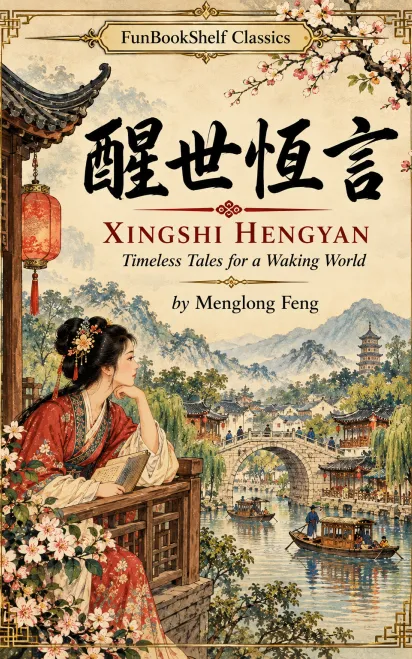
Book cover of "醒世恆言"

醒世恆言

Menglong Feng

"醒世恆言" by Menglong Feng is a collection of moralistic tales written during the late Ming dynasty. The stories typically explore themes of virtue, familial duty, and social justice, often reflecting on human relationships and societal norms. The narratives usually present characters caught in moral dilemmas, showcasing their choices and consequences. At the start of the work, the opening portion introduces a poignant tale of two counties competing to marry off a lonely girl. Set in a time of social distinctions and family loyalties, it begins with the tragic story of a man named Wang Feng and his niece Qiong Ying, whose marriage is manipulated by her uncle for selfish reasons. After a series of misfortunes resulting from their poor choices, including Wang Feng's decision to marry off his niece to an unsuitable man, the tale escalates into themes of redemption and moral values as it juxtaposes the fate of Qiong Ying with that of her cousin, showcasing the complexities of wealth, beauty, and virtue. (This is an automatically generated summary.)

The Works of the Rev. Hugh Binning

Hugh Binning

"The Works of the Rev. Hugh Binning" by Hugh Binning is a collection of theological writings and sermons composed in the 17th century. The work encompasses various facets of Christian doctrine, practical religion, and insights into Binning's life and times as a minister. It aims to clarify and expound on beliefs central to the Christian faith while addressing the socio-political upheavals of his era. The opening of the collection introduces the reader to Binning's remarkable contributions, including a preface and a detailed account of his life, setting the context for his theological exploration. The contents list indicates a breadth of topics ranging from foundational Christian beliefs to specific sermons on love and practical religion, suggesting Binning's intention to engage deeply with his audience. Notably, the editor provides historical context regarding Binning's ministry during a tumultuous period in Scottish history, highlighting the personal and communal struggles faced during the time. This preliminary section presents the groundwork for understanding the rich and relevant themes addressed in the subsequent writings. (This is an automatically generated summary.)

Grasshopper Green and the Meadow Mice

John Rae

"Grasshopper Green and the Meadow Mice" by John Rae is a charming children's book, likely written in the early 20th century. This delightful tale follows the adventures of Grasshopper Green, who, after a carefree summer of fiddling and dancing, finds himself unprepared for the harshness of winter. The story underscores themes of kindness, generosity, and friendship through the experiences of the titular Grasshopper and a family of Meadow Mice. In this heartwarming narrative, Grasshopper Green is rescued by the Meadow Mouse family when he is left homeless and cold by the refusal of an ant to take him in. Grateful for their hospitality, Grasshopper Green enjoys cozy evenings with the Meadow Mice, sharing meals and music. However, the peace is threatened when Mouser, the farmer's cat, invades their home. Demonstrating bravery and resourcefulness, Grasshopper Green uses magic pellets to grow to a larger size, scaring off the cat and ultimately becoming a hero in the eyes of his newfound friends. The book celebrates the importance of community and the rewards of helping those in need. (This is an automatically generated summary.)

Time and Tide: A Romance of the Moon

Robert S. (Robert Stawell) Ball

"Time and Tide: A Romance of the Moon" by Sir Robert S. Ball is a scientific lecture series published in the late 19th century. The work blends scientific inquiry with poetic elements, focusing on the theory of tidal evolution and its relationship with lunar phases. In this book, Ball discusses the profound historical and astronomical implications of tides, emphasizing how they reveal insights about Earth's past and its connection with the moon. The opening of the book sets the stage for a deep dive into the scientific exploration of tides and their significance, introducing the reader to the idea that the moon plays a crucial role in producing tides on Earth. Ball presents the thoughts and theories related to tidal forces, detailing the historical relationship between the Earth and moon. He begins to illustrate how observing present-day tidal movements can inform our understanding of ancient geological history, suggesting that the tides are not just mere phenomena but evidence of a dynamic Earth-Moon relationship that has evolved over millions of years. Through this engaging introduction, he invites the audience to consider the interconnectedness of celestial mechanics, geology, and historical evolution in a way that marries the realms of poetry and science. (This is an automatically generated summary.)

Mary Ware's Promised Land

Annie F. (Annie Fellows) Johnston

"Mary Ware's Promised Land" by Annie F. Johnston is a novel written in the early 20th century. The book follows the spirited character Mary Ware, a determined young woman seeking adventure and her own path in life amidst familial expectations. As Mary embarks on a journey of self-discovery and exploration, the story unveils her aspirations, relationships, and the challenges she faces in pursuit of her dreams. The opening of the novel captures a moment of transition as Mary and her family travel by train back to their home in Lone-Rock, highlighting her optimistic disposition and yearning for new experiences. Mary's lively interactions aboard the train with her friends and family reveal her adventurous spirit, while her aspirations of finding a job and living independently hint at a push against traditional gender roles. Through her conversations with her mother and brothers, we see Mary's internal struggle between familial loyalty and her desire for independence, setting the stage for her quest for identity and purpose in a world brimming with possibilities and uncertainties. (This is an automatically generated summary.)

桃花扇

Shangren Kong

"桃花扇" by Shangren Kong is a historical play likely written in the late 17th to early 18th century. Set during the tumultuous final years of the Ming dynasty, it explores complex themes of love, loyalty, and the sociopolitical landscape of the time. The central character,侯朝宗 (Hou Chaozong), is depicted as a young scholar caught amidst personal desires and political unrest, highlighting the dichotomy of romantic pursuits against the backdrop of societal chaos. The opening of "桃花扇" introduces us to the protagonist, Hou Chaozong, who is enjoying a peaceful life despite his family's prestigious background, as tumultuous events unfold around him. He sets out to meet friends at a scenic location to view plum blossoms but learns that their intended spot is already occupied by noble guests. Instead of being disheartened, Chaozong expresses his longing for a romantic connection and suggests visiting the renowned courtesan, 香君 (Xiang Jun). As the narrative weaves through the budding camaraderie among Chaozong and his companions, it foreshadows the intertwining of their fates with romantic entanglements and the volatile political climate. The lyrical elements and character banter set a vivid stage for the engaging conflicts that follow. (This is an automatically generated summary.)

東度記

active 17th century Qingxidaoren

"東度記" by 清溪道人 is a philosophical novel written in the 17th century. The narrative explores themes of morality, the nature of existence, and the interaction between spiritual teachings and worldly concerns through a blend of allegorical storytelling and dialogue. Central characters include a benevolent fisherman named 卜老 and a wise monk named 不如密多, who engage in discussions that reflect on human virtue, the value of compassion, and the importance of returning to one's true nature. The opening of the book introduces a rich cosmological perspective, describing the creation and interconnectedness of all things while highlighting the path of human enlightenment and moral conduct. It begins with a mystical explanation of the world and introduces 卜老 and his wife, who, after showing compassion by releasing a fish they had caught, find themselves in a moral quandary about their livelihood. They encounter a laughing monk who offers to help them, setting in motion a series of events that explore the implications of their actions and the philosophical notions of karma and destiny intertwined with their daily lives. This segment establishes the foundation for the ensuing tales of enlightenment and moral trials faced by the characters in their quest for deeper understanding. (This is an automatically generated summary.)

孝經

Unknown

"孝經" by Unknown is a classical text written during the early centuries of the Common Era. This work is a philosophical treatise that focuses on the moral principle of filial piety, detailing the responsibilities and virtues associated with family relationships. It is foundational in Confucian thought, emphasizing the importance of respect and duty towards one's parents and ancestors. The book explores the nature of filial piety through discussions between Confucius and his disciple, Zengzi. It delineates the various manifestations of filial duty across different societal roles, from emperors to commoners. The overarching message is that filial piety underpins moral conduct and societal harmony, serving as both a familial obligation and a civic duty. The text advocates that sincere respect and honor towards one’s parents not only fosters personal virtue but also stabilizes and enriches the community and state, linking individual morality to broader social order. (This is an automatically generated summary.)

韓湘子全傳

active 17th century Yang, Erzeng

"韓湘子全傳" by Erzeng Yang is a 17th-century work that appears to be a mythological and fantastical narrative, likely combining elements of folklore and moral allegory. The story appears to explore themes related to life, death, and the quest for immortality, with characters that hint at a rich tapestry of human experience, possibly through the lens of Daoist or Chinese mythology, including celestial beings and transformations. At the start of the narrative, the author sets a mystical tone, discussing the origins of the universe and the intertwining of elements and spirits, establishing a backdrop of enchantment and complexity. We are introduced to the main characters in a pastoral setting: a white crane that has acquired supernatural wisdom and a mystical deer, both of whom are destined for a transformative journey. Central to the unfolding tale is the character of 韓湘子, who emerges from a lineage of virtue, suggested to be destined for greatness—bringing forth themes of reincarnation and the ties between past deeds and present circumstances. The opening serves as a rich introduction to an intricate world where mortal lives weave through the cosmos, foreshadowing adventures that intertwine the spiritual and earthly realms. (This is an automatically generated summary.)